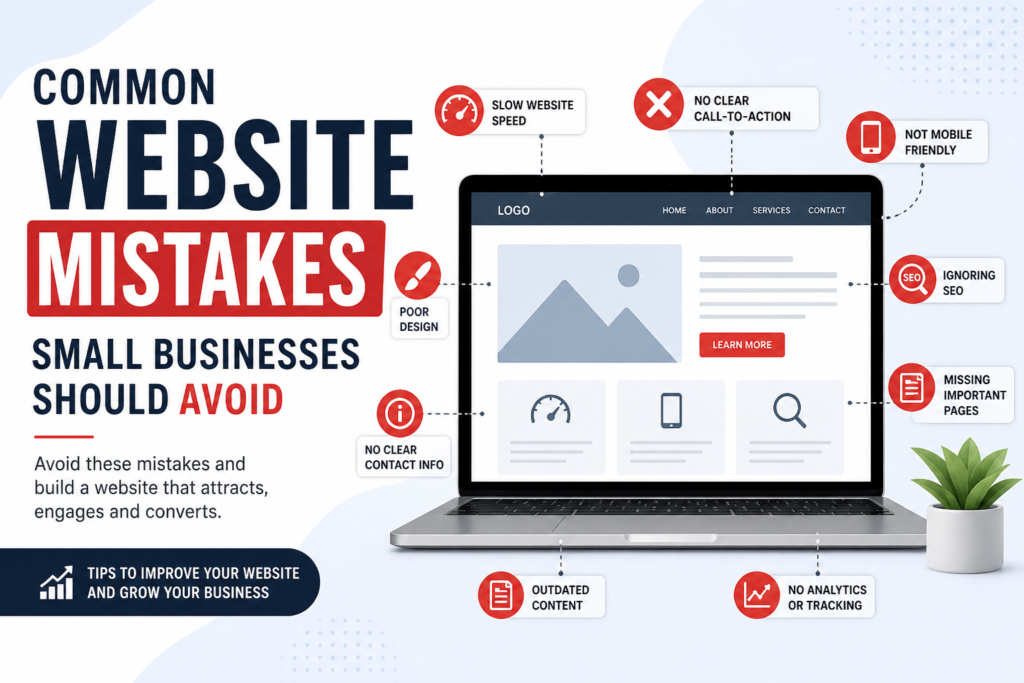
10 Common website mistakes can seriously impact the success of small businesses in today’s competitive digital world. While having a website is essential, many business owners unknowingly make errors that reduce their visibility, affect user experience and limit conversions.
From slow loading speeds to poor design and lack of SEO, these common website mistakes can prevent your business from reaching its full potential. The good news is that most of these issues are easy to identify and fix once you understand what to look for.
In this blog, we’ll explore the most common website mistakes small businesses should avoid and provide practical tips to help you create a website that attracts visitors, builds credibility and drives real results.
1. Slow Website Speed
One of the biggest mistakes small businesses make is having a slow-loading website. Visitors expect a website to load within a few seconds. If it takes too long, they are likely to leave and move to a competitor.
Slow speed can be caused by:
- Large image files
- Poor hosting
- Unoptimized code
Why it matters:
A slow website not only affects user experience but also impacts your search engine rankings.
2. Not Optimized for Mobile Devices
Most users today browse websites on their smartphones. If your website is not mobile-friendly you are missing out on a large number of potential customers.
Common issues include:
- Text too small to read
- Buttons hard to click
- Layout not adjusting properly
Solution:
Make sure your website is fully responsive and works smoothly on all devices.
3. Ignoring SEO
Having a website without SEO is like opening a shop without telling anyone where it is. Many small businesses fail to optimize their websites for search engines which makes it hard for customers to find them online.
Basic SEO includes:
- Using relevant keywords
- Writing proper meta titles and descriptions
- Optimizing images
- Creating quality content
Why it matters:
SEO helps your website rank on search engines and brings organic traffic.
4. Poor Website Design
First impressions matter. A cluttered or outdated design can make your business look unprofessional.
Common design mistakes:
- Too many colors or fonts
- Confusing layout
- Low-quality images
Tip:
Keep your design clean, simple and aligned with your brand identity.
5. No Clear Call-to-Action (CTA)
Your website should guide visitors on what to do next. Without a clear call-to-action, users may leave without taking any action.
Examples of CTAs:
- “Contact Us”
- “Get a Free Quote”
- “Book Now”
Why it matters:
A strong CTA helps convert visitors into customers.
6. Lack of Clear Branding
Branding is what makes your business recognizable. Many small business websites lack consistency in colors, fonts and messaging.
This creates confusion and reduces trust.
Make sure to:
- Use consistent colors and fonts
- Have a clear logo
- Maintain a consistent tone of voice
7. Missing Important Pages
Some small business websites do not include essential pages, which can make them look incomplete.
Important pages include:
- Home
- About Us
- Services
- Contact Page
Why it matters:
These pages help customers understand your business and build trust.
8. No Contact Information or Hard-to-Find Details
If customers cannot easily contact you, they will leave your website.
Make sure to include:
- Phone number
- Email address
- Location
9. Not Updating Content Regularly
An outdated website gives the impression that your business is inactive.
Examples:
- Old blog posts
- Outdated services
- Incorrect contact details
10. No Analytics or Tracking
Many small businesses don’t track their website performance. Without data you won’t know what’s working and what needs improvement.
You can use tools like:
- Google Analytics
- Search Console
Why it matters:
Tracking helps you make better decisions and improve your website performance.
Conclusion:
A website is a powerful tool for growing your small business only if it is built and managed correctly. Avoiding these common mistakes can help you create a website that attracts visitors, builds trust and converts leads into customers.
If you’re planning to build or improve your website, focusing on speed, design, SEO and user experience will make a huge difference in your success.
Hi, i read your blog from time to time and i own a similar
one and i was just wondering if you get a lot of spam
feedback? If so how do you stop it, any plugin or anything you can recommend?
I get so much lately it’s driving me mad so any assistance is very much appreciated.